
Why Do Skis Need Waxing?

Complete Guide to Ski Wax and Performance
If you’ve ever wondered why your skis suddenly feel slow, heavy, or unpredictable, the answer is usually simple: they need waxing.
Ski waxing is not just routine maintenance. It is a fundamental part of ski performance. Proper ski wax application improves glide, increases speed, enhances control, protects the ski base, and extends the lifespan of your equipment.
Whether you are a recreational skier or training for competition, waxing your skis directly affects how they perform on snow.
What Happens If You Don’t Wax Your Skis?
Modern ski bases are made from porous polyethylene material designed to absorb wax. Under a microscope, the surface is not smooth. It contains micro-structures that interact with snow crystals.
When skis are not waxed:
• Friction increases
• Glide decreases
• The base dries out
• Oxidation begins
• Performance drops noticeably
A dry ski base often turns grey. This is a sign that the material is no longer properly saturated. Over time, this leads to reduced wax absorption and permanent base fatigue.
Regular ski base maintenance keeps the structure healthy and responsive.
How Ski Wax Improves Glide
The main reason skis need waxing is to reduce friction between the ski base and the snow.
As you ski, pressure and temperature create a microscopic water layer under the ski. High-quality ski wax helps manage this water film, allowing smooth and controlled glide across different snow conditions.
Without proper wax:
• Skis feel sticky on flat terrain
• Turns require more force
• Acceleration becomes inconsistent
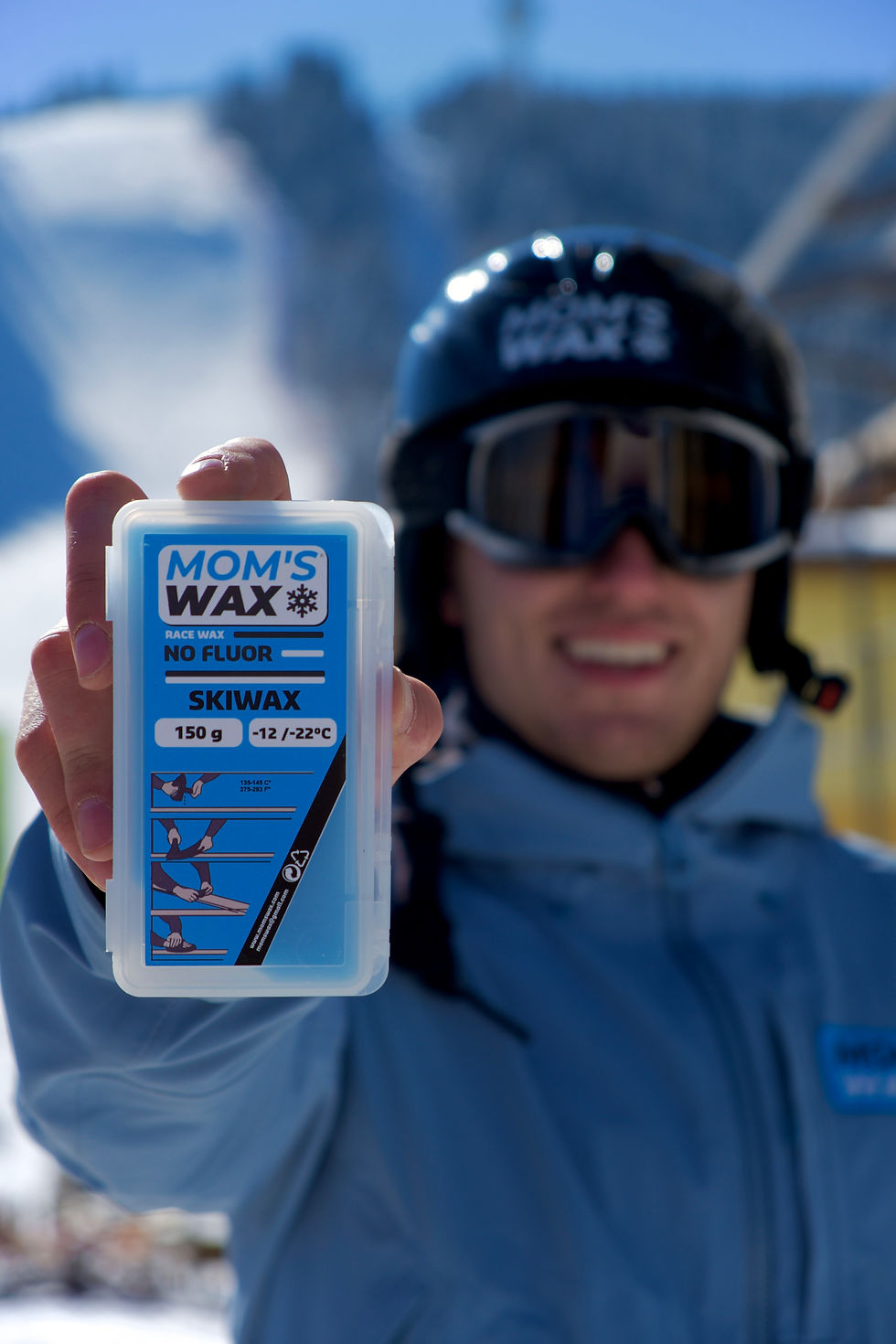
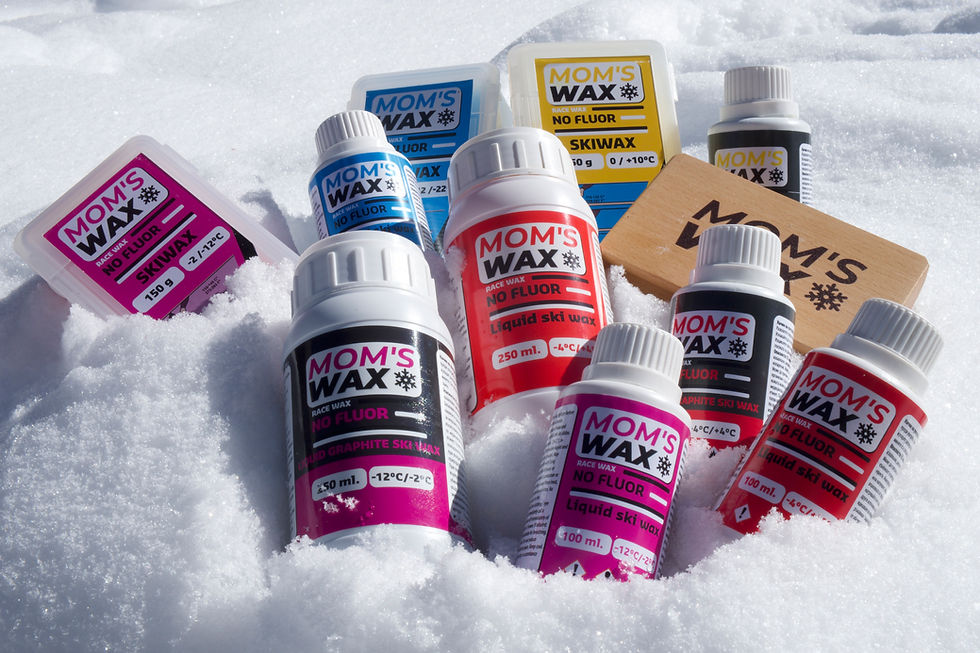
Using temperature-specific ski wax — yellow, red, purple, or blue — ensures optimal glide depending on snow temperature and conditions.
Does Waxing Really Increase Speed?
Yes, but not in the way most people think.
Speed in skiing is about efficiency, not force. Well-waxed skis maintain velocity with less muscular effort. You conserve energy, especially during long ski days or training sessions.
Hot wax penetrates deep into the ski base and provides long-lasting performance. Liquid ski wax offers quick application for daily skiing or short sessions when time is limited.
Choosing between hot wax and liquid wax depends on how often you ski and how demanding the conditions are.
Why Graphite Ski Wax Matters on Dirty or Artificial Snow
Snow is not always clean. On old, artificial, or high-traffic slopes, static friction increases due to contamination and repeated freeze–thaw cycles.
This is where graphite ski wax becomes essential.
Graphite additives reduce static buildup caused by dirt particles in the snowpack. The result is more consistent glide and improved control, especially on transformed or aggressive snow.
Graphite ski wax is particularly recommended for:
• Old snow
• Artificial snow
• Dirty slopes
• Competitive environments
Predictable glide directly improves stability and confidence.
Ski Base Protection and Long-Term Durability
Beyond speed and glide, ski waxing protects your investment.
A properly waxed ski base:
• Resists abrasion
• Retains structure
• Absorbs future wax more effectively
• Maintains performance characteristics
Neglecting waxing accelerates wear. Repairing or replacing ski bases is significantly more expensive than regular maintenance.
Think of waxing as preventative care for your skis.
How Often Should You Wax Your Skis?
Frequency depends on usage and snow conditions. As a general rule:
• Recreational skiing: every 5–7 ski days
• Intensive training or racing: more frequently
• After skiing in dirty or artificial snow: immediately
If your skis feel slower than usual or lose their smooth transition between turns, it is likely time for fresh wax.
Conclusion: Why Ski Waxing Is Essential
Skis need waxing because snow conditions constantly change. Temperature changes. Surface contamination changes. Friction changes.
Ski waxing improves glide, increases efficiency, enhances control, protects the base, and extends ski lifespan.
If your skis feel dull or slow, the issue is rarely your technique.
It is usually the base asking for wax.

Comments